
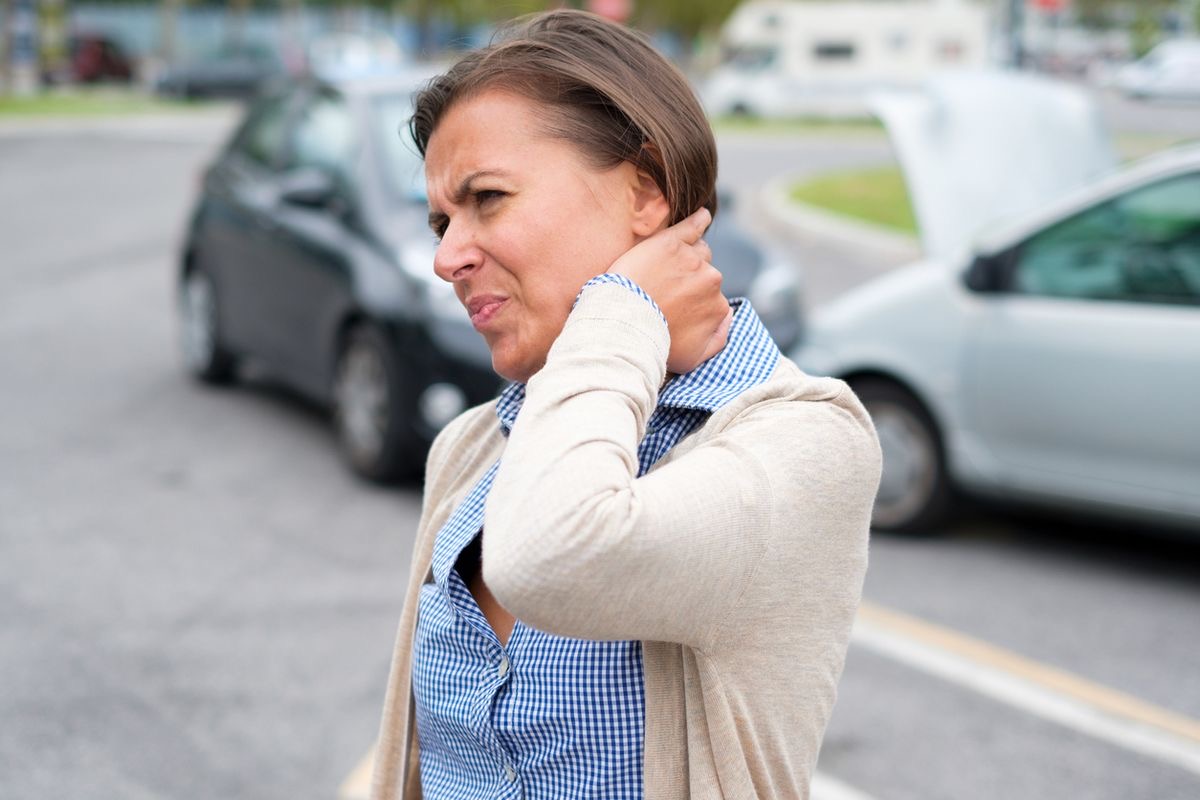
How CRMA Documents Whiplash and Cervical Instability for Personal Injury Cases
How CRMA Documents Whiplash and Cervical Instability for Personal Injury Cases
Computerized Radiographic Mensuration Analysis (CRMA) is the objective imaging method used to measure spinal translation, angular displacement, and ligament integrity following trauma such as a motor vehicle collision. For personal injury cases, CRMA provides measurable, reproducible data that documents cervical instability in ways that standard X-rays and clinical examination alone cannot — translating a patient's injury into evidentiary documentation that satisfies the standards required in legal proceedings.
At Champion Chiropractic & Spinal Injury in Clive, Iowa, CRMA analysis is a core component of our personal injury evaluation protocol. Dr. Justin Luneburg, DC, FPSC(C) — Iowa's only Fellowship-trained primary spine care chiropractor — performs and interprets CRMA studies to generate objective injury documentation for patients and their legal teams.
What Is Computerized Radiographic Mensuration Analysis (CRMA)?
CRMA is a biomechanical measurement protocol applied to flexion-extension X-rays (also called stress views or dynamic radiographs) of the cervical spine. Unlike static X-rays, which show the spine in a neutral position, flexion-extension views capture the spine's motion across its range of movement — exposing abnormal translation or angular displacement that indicates ligament damage.
The measurements generated include:
Translation (mm): Abnormal horizontal slipping of one vertebra over another. Greater than 3.5mm of horizontal translation at any cervical segment is the threshold established in the peer-reviewed literature and recognized in AMA Guides, 6th Edition, as indicative of ligamentous instability.
Angulation (degrees): Abnormal rotational movement between adjacent vertebral segments. Greater than 11° of relative angulation is considered indicative of posterior ligament complex injury.
Anterior Longitudinal Ligament (ALL) and Posterior Longitudinal Ligament (PLL) integrity: Assessed indirectly through segmental motion analysis.
Alar ligament and transverse ligament stress: Evaluated via upper cervical motion studies when upper cervical injury is suspected.
These measurements are not subjective impressions — they are calculated values derived from calibrated radiographic images and reproducible across examiners who follow standardized protocols.
Why Standard X-Rays Miss Cervical Ligament Injuries
A common frustration for personal injury patients — and their attorneys — is that emergency room imaging comes back "normal" despite significant pain and neurological symptoms following a collision. This happens for a predictable reason: standard X-rays and even most MRIs are taken in a neutral, static position. Ligamentous injuries only manifest on imaging when the spine is loaded and moving.
A cervical ligament does not fracture — it stretches, tears microscopically, and loses its ability to constrain vertebral motion within normal limits. On a neutral X-ray, the spine may look perfectly aligned. On a dynamic study taken in flexion and extension, the same spine will show excessive translation or angulation that reveals the instability.
This distinction is critical in personal injury litigation. An insurer or opposing expert pointing to a "normal" ER X-ray as evidence that no injury occurred is a fundamentally flawed argument — one that CRMA documentation directly refutes with measurement data.
CRMA and AMA Impairment Ratings
The AMA Guides to the Evaluation of Permanent Impairment, 6th Edition, incorporate cervical instability parameters directly into the impairment rating framework. When CRMA measurements exceed established thresholds:
≥3.5mm translation at any cervical segment: clinically significant instability
≥11° angulation relative to adjacent segments: clinically significant instability
These measurements translate into a documented diagnosis of Alteration of Motion Segment Integrity (AOMSI) under AMA Guides methodology — one of the highest-weighted impairment ratings available for spinal injuries. An AOMSI diagnosis at a single cervical level can place a patient in a significant whole-person impairment range, with substantial implications for settlement valuation.
Without CRMA, AOMSI cannot be documented. Without AOMSI documentation, an attorney is leaving impairment ratings — and settlement value — on the table.
What the CRMA Evaluation Includes at Champion Chiropractic
Our CRMA protocol for personal injury patients includes:
Comprehensive intake and causation history. We document the mechanism of injury, the forces involved, the onset and progression of symptoms, and prior spinal history to establish causation clearly.
Cervical flexion-extension radiographs. Dynamic X-ray views taken in maximum flexion and extension under standardized protocol.
Digital mensuration analysis. Computerized measurement of translation, angulation, and segmental motion at each cervical level, using reference databases and AMA threshold criteria.
Written CRMA report. A formal report documenting all measured values, comparative normal ranges, threshold exceedances, diagnosis, and clinical interpretation — formatted for use in legal proceedings.
Causation narrative (on request). A separate document explaining, within a reasonable degree of clinical certainty, how the documented injuries are causally related to the identified traumatic event.
All documentation is prepared to evidentiary standards. Dr. Luneburg has experience presenting CRMA findings in the context of personal injury cases and can provide expert support to legal teams as needed.
Who Should Receive a CRMA Evaluation?
A CRMA evaluation is indicated when a patient presents with any of the following following a motor vehicle collision or traumatic event:
Neck pain, stiffness, or limited range of motion
Headaches originating from the cervical spine (cervicogenic headache)
Shoulder, arm, or hand pain, numbness, or tingling (cervical radiculopathy)
Dizziness, visual disturbances, or difficulty concentrating (possible cervicogenic or post-concussive symptoms)
Symptoms that persist or worsen beyond 4–6 weeks post-collision
Significant collision mechanism (rear-end impact, high speed, airbag deployment, loss of consciousness)
Timing matters. Ligamentous injuries respond to early intervention, and documentation is strongest when it is connected by a clear timeline to the traumatic event. Early evaluation — ideally within days to weeks of the collision — produces the most defensible record.
For Personal Injury Attorneys: What CRMA Documentation Gives You
If you are a PI attorney representing a client injured in a motor vehicle collision, CRMA provides:
Objective injury evidence that withstands expert challenge — measured values, not clinical impressions
AMA-compliant impairment ratings with documented threshold exceedances (AOMSI)
Causation documentation within a reasonable degree of clinical certainty
Formal written reports formatted for use in demand letters, mediations, and trial
A credentialed expert — Dr. Luneburg holds the FPSC(C) Fellowship designation, the highest post-doctoral credentialing available in primary spine care, conferred by Cleveland University and SUNY Buffalo Jacobs School of Medicine
Iowa has a limited number of providers with the training and experience to perform and interpret CRMA at this level. For cases where cervical spine injury is at issue, documentation from a Fellowship-trained specialist provides a qualitative advantage in establishing the credibility and completeness of the injury record.
Frequently Asked Questions
What is CRMA and how is it different from a regular X-ray?
CRMA (Computerized Radiographic Mensuration Analysis) is a biomechanical measurement protocol applied to dynamic (flexion-extension) X-rays of the spine. Standard X-rays are taken in a neutral position and cannot reveal ligamentous instability. CRMA captures the spine in motion, measuring translation and angular displacement to objectively document abnormal movement caused by ligament damage. The measurements are precise, reproducible, and referenced against AMA Guides criteria.
Can CRMA diagnose a ligament tear after a car accident?
CRMA cannot directly visualize a ligament tear the way an MRI can visualize soft tissue structure, but it measures the functional consequence of that tear — excessive or abnormal spinal motion. When a ligament is damaged, it loses its restraining function, and adjacent vertebrae translate or rotate beyond normal limits. CRMA captures and quantifies that abnormal movement. In combination with clinical history and examination, CRMA measurement data provides strong objective evidence of ligamentous injury.
What is the CRMA threshold for diagnosing cervical instability?
The peer-reviewed threshold, recognized in the AMA Guides to the Evaluation of Permanent Impairment, 6th Edition, is ≥3.5mm of horizontal translation at any cervical segment, or ≥11° of relative angulation between adjacent segments. Measurements exceeding these values indicate Alteration of Motion Segment Integrity (AOMSI) — a clinically significant instability diagnosis.
How soon after a car accident should I get a CRMA evaluation?
As soon as possible. Early documentation creates a clear timeline connecting your injuries to the accident, which strengthens the evidentiary record. Practically, flexion-extension studies are best performed after acute muscle guarding has resolved enough to allow full range of motion — typically 1 to 4 weeks post-injury. However, the evaluation should not be delayed past the point where it becomes difficult to attribute the injury to the accident causally.
Does CRMA affect my personal injury settlement?
CRMA documentation can significantly affect settlement value by establishing an objective, measurable injury — particularly when measurements meet the AOMSI threshold. Documented AOMSI translates into specific impairment ratings under AMA methodology, which attorneys use to anchor damages calculations. Cases with objective imaging documentation generally command higher settlement offers than cases relying on subjective symptom reports alone.
Where can I get CRMA analysis in Iowa after a car accident?
Champion Chiropractic & Spinal Injury in Clive, Iowa offers CRMA analysis as part of our personal injury evaluation protocol. Dr. Justin Luneburg, DC, FPSC(C) is Iowa's only Fellowship-trained primary spine care chiropractor — the most credentialed provider in the region for spinal trauma documentation. Call (515) 777-1014 or visit championfamilychiro.com to schedule an evaluation.
What is an FPSC(C) and why does it matter for a CRMA evaluation?
FPSC(C) stands for Fellowship in Primary Spine Care (Candidate), a post-doctoral credential conferred through a joint program between Cleveland University and the SUNY Buffalo Jacobs School of Medicine. It is the highest-level post-doctoral training available in primary spine care and requires advanced training in clinical biomechanics, diagnostic imaging interpretation, and management of complex spinal conditions. In the context of personal injury cases, it means the provider interpreting your CRMA has training that exceeds standard chiropractic licensure — a distinction that matters when documentation may face expert challenge.
About the Author
Dr. Justin Luneburg, DC, FPSC(C) is the founder and lead clinician at Champion Chiropractic & Spinal Injury in Clive, Iowa. He holds the Fellowship in Primary Spine Care credential through Cleveland University and SUNY Buffalo Jacobs School of Medicine — making him Iowa's only Fellowship-trained primary spine care chiropractor. His clinical focus is personal injury, auto accident, and spinal trauma cases, with expertise in CRMA analysis, AMA-compliant impairment ratings, causation documentation, and mTBI assessment. He regularly works with personal injury attorneys across Iowa to provide objective injury documentation and expert support.
Champion Chiropractic & Spinal Injury
11050 Hickman Road, Clive, IA 50325
(515) 777-1014
championfamilychiro.com
This article is for informational purposes. It does not constitute legal or medical advice for any specific individual's case. If you were injured in a motor vehicle collision, please seek evaluation from a qualified healthcare provider.