
From First Visit to Settlement: The Documentation Timeline Attorneys Should Expect From a PI Chiropractor
Short answer: A personal injury chiropractor should hand you something usable at every stage of a case, not one report at the end. The stages are an initial evaluation and report in the first days, a documented treatment plan with measurable goals, formal re-examinations about every 30 days or 12 visits, referral letters when the findings call for imaging or another specialty, a status update when you ask for one, and a final narrative report at maximum medical improvement (MMI) with causation, residual findings, impairment rating and future care. If a provider can't tell you what you'll receive and when, the file is already behind.
Why the timeline matters
Most record problems in a PI case are timing problems. The mechanism history was taken three weeks late. The first re-exam never happened. The causation opinion was written from memory at demand. Each of those can be avoided if you know what a well-run file looks like at each stage and ask for it at referral.
This is the sequence we follow at Champion Chiropractic & Spinal Injury, and a fair benchmark for any treating chiropractor you work with. For the content of each record element, see our 10-element checklist.
Stage 1: Intake and initial evaluation (first visit)
What should exist after visit one:
Mechanism-of-injury history specific enough to reconstruct the crash: direction of impact, seat and head position, awareness, restraint, headrest, airbags, vehicle damage.
Prior history stating baseline function and any previous neck or back care, or a stated absence of it.
Measured baseline: inclinometer range of motion, named orthopedic and neurological tests, a pain scale and a validated disability index such as the Neck Disability Index.
Working diagnosis with ICD-10 codes that follow from the exam, and a Quebec Task Force WAD grade where it applies.
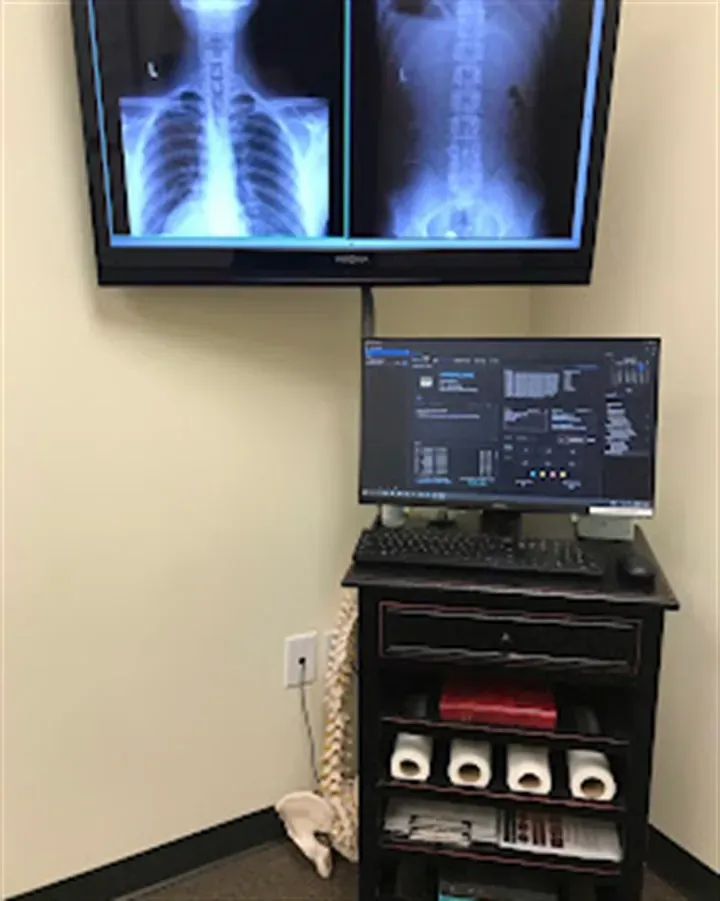
Imaging decision: standard views, motion (flexion/extension) views, or a documented reason for neither. When motion views are taken, computerized measurement of those films produces objective, demonstrative findings. How that works →
Red-flag screen, with a same-day referral to the ER or a physician if it is positive.
You should be able to ask for the initial evaluation report once the first visit is complete. If your office needs it for an early-case decision, say so at referral.
Stage 2: Treatment plan with goals (same visit or the next)
A plan that names what is being treated, how often, for how long, and which measurable goals will mark progress. Frequency should be tied to the injury grade and published treatment guidelines, not left open-ended. This is the document that answers the "excessive treatment" argument months later.
Stage 3: Daily notes and the first re-examination (about day 30 or visit 12)
Between formal re-exams, each note should record what changed that day and the patient's response to care, not a pasted paragraph. At the first re-exam, the provider repeats the intake measurements: range of motion, outcome scores and the key orthopedic and neurological tests. You are looking for three things:
Change in numbers, in either direction.
A plan revision, whether continuing, adjusting, adding a referral or tapering.
A stated reason for any gap in care, such as work, childcare or illness.
Stage 4: Referrals and co-management (when findings call for it)
When the exam points to a disc injury, nerve involvement, a concussion picture or something outside chiropractic scope, the record should show a timely referral: MRI, neurology, pain management or orthopedics. A referral letter that states the clinical question is far more useful to the next provider than a bare order. Delay is a gap the defense will notice, so the record should show when the question was raised and when it was sent.
Stage 5: Status updates on request
Mid-case, you will sometimes need a short status letter for a negotiation, a carrier request or a client update. A good provider can produce one from the existing record without re-examining the patient: diagnosis, progress against goals, current plan and expected duration. If the record is built on measured findings, this is quick. If it isn't, it becomes a reconstruction exercise.
Stage 6: MMI and the final narrative report
At discharge or maximum medical improvement the file should contain:
Residual findings, measured the same way as at intake.
Causation statement, phrased the way the jurisdiction expects and addressing any prior condition.
Impairment rating under the AMA Guides to the Evaluation of Permanent Impairment when warranted, with the edition identified.
Future care needs and the basis for them.
Itemized billing ledger matching the visits and services in the notes.
This report should read as a summary of a record that already exists, not a new document. The test: a reader who has seen only the intake and re-exams should not be surprised by anything in it.
Stage 7: Records requests, depositions and testimony
Plan for this at referral. Ask whether the provider will respond to records requests and subpoenas, and whether they will testify. Daubert-qualified expert testimony is available from our office when a case requires it. Whether and how it is used is a decision for counsel.
Timeline at a glance
Stage | When | What you should have |
|---|---|---|
Initial evaluation | First visit | Mechanism history, measured baseline, diagnosis, imaging decision, red-flag screen |
Treatment plan | First or second visit | Goals, frequency, duration, guideline rationale |
First re-exam | ~30 days or 12 visits | Repeated measurements, plan revision, documented gaps |
Referrals | As findings dictate | Letters stating the clinical question; MRI or specialty follow-up |
Status update | On request | Diagnosis, progress, current plan, expected duration |
MMI / final report | At discharge | Causation, residual findings, impairment rating, future care, ledger |
Testimony | If the case requires | Records, subpoena response, deposition or trial availability |
Questions to ask a chiropractor before you refer
What will I have after the first visit, and when?
How do you re-examine, and how often?
What does your final report contain, and who writes it?
How do you handle records requests and depositions?
How do you document gaps in care or a patient who stops responding?
A provider who answers these without hesitation has a process. One who can't has a file you will be rebuilding later.
Frequently asked questions
How soon after referral can a chiropractor produce a report?
The initial evaluation report can follow the first visit. Ask for the timeline at referral so it is on the calendar rather than assumed.
How often should a PI chiropractor re-examine a patient?
Commonly every 30 days or about every 12 visits, and any time the clinical picture changes. Each re-exam repeats the intake measurements.
When is a final narrative report written?
At discharge or maximum medical improvement, once residual findings can be measured against the intake baseline.
Does a chiropractor give impairment ratings?
Chiropractors can provide impairment ratings under the AMA Guides when the record supports it. Whether a rating is appropriate, and how it is used, is for counsel to decide. (General information, not legal advice.)
Can I ask for a status letter without a new exam?
Yes, when the provider's re-exams are current. The letter summarizes the existing record.
Refer a client or request a sample report
If you handle auto-injury cases in the Des Moines metro and want to see what each stage looks like on a real file, call (515) 777-1014 or visit our attorney page.
Justin Luneburg, DC, FPSC(C), is clinic director at Champion Chiropractic & Spinal Injury in Clive, Iowa, and a Fellowship Candidate in Primary Spine Care. He provides narrative reports, impairment ratings and Daubert-qualified expert testimony for personal injury cases. More about Justin Luneburg.